If you are looking at home CCTV systems, one of the first decisions you will face is whether to choose wired or wireless CCTV. Both have benefits, and the right choice depends on your property, your budget and how you plan to use the system.
This guide compares wired vs wireless CCTV, explaining how each type works, how reliable each one is in practice, and what installation and running costs look like over time. It also covers a factor that matters more in Glasgow than in many other places: the effect of older stone-built properties on wireless signals.
How Wired CCTV Systems Work
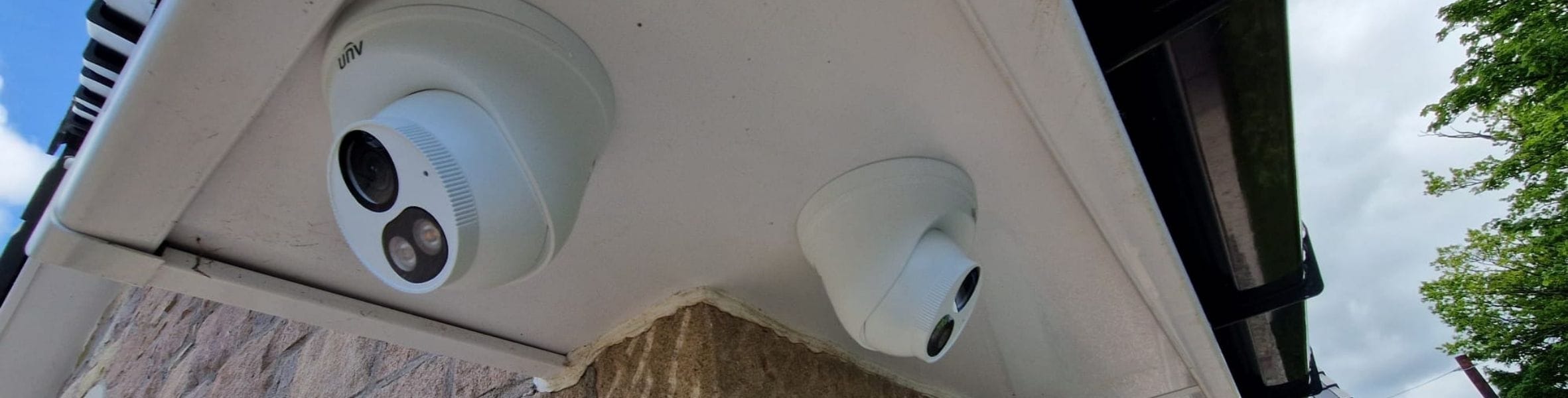
A wired CCTV system connects each camera to a recorder through a physical cable, which carries the video signal directly rather than sending it over your home network. Most modern wired CCTV systems use Power over Ethernet (PoE), a method that delivers both power and video through a single network cable. This means each camera needs only one cable run back to the recorder, with no separate power supply at the camera itself.
A typical wired home installation includes:
- Cameras positioned at entry points, driveways and other vulnerable areas
- A network video recorder (NVR) that stores footage inside your home
- A hard drive you own outright, with no ongoing storage fees
- Cabling routed discreetly through lofts, eaves or wall cavities
- App access so you can view live and recorded footage from your phone
Because footage records continuously to a drive within the property, a wired system does not depend on your broadband connection to capture events. The internet is only needed when you want to view the cameras remotely.
How Wireless CCTV Systems Work
The term wireless can be misleading, because it usually describes how the video signal travels rather than how the camera is powered. In most cases, a wireless camera sends its footage over your home Wi-Fi, but it still needs a power source of some kind. That power typically comes from one of two places: a rechargeable battery inside the camera, or a mains plug positioned close to it.
Battery-powered cameras are genuinely free of cables, but the batteries need recharging or replacing. A camera covering a busy front door can drain its battery within a few weeks, which often means climbing a ladder to retrieve it, and doing so more frequently than expected through a Scottish winter. Mains-powered wireless cameras avoid this, although they still require a socket within reach of the camera position.
Most wireless systems record when motion is detected rather than continuously, and many store footage in the cloud rather than on a recorder in the home. Cloud storage is convenient, but as covered later in this guide, it often carries an ongoing subscription cost.
Reliability and Signal Considerations
A wired camera has a dedicated connection to its recorder, so the picture remains steady regardless of how busy your home network is. Footage is captured in full quality, day and night, without competing with phones, tablets and smart devices for bandwidth.
A wireless camera depends on the strength and stability of your Wi-Fi. If the router restarts, the signal weakens at the edge of the garden, or the network comes under heavy load, the feed can drop or stutter at the moment you need it to be clear. Several factors influence how well wireless CCTV performs:
- Distance from the router, particularly for cameras at the far end of a garden or on an outbuilding
- Wall construction, as solid masonry absorbs far more signal than modern plasterboard
- Network congestion from the other devices sharing your broadband connection
- Interference from neighbouring networks, which is common in flats and terraces
For a small flat with the router in the hallway and a single camera at the door, wireless is often perfectly adequate. For a larger home needing coverage at the front, the rear and perhaps a garage or shed, a wired connection is typically the more dependable choice. If you plan to add professional monitoring at any stage, a stable feed becomes even more important, as explained in how CCTV monitoring works in Scotland.
Older Properties and Stone Walls in Glasgow
Property age matters more than many buyers expect. A large share of the housing around Glasgow and the central belt is stone built, including sandstone tenements, Victorian and Edwardian terraces, and older semi-detached homes with solid walls that can be close to two feet thick. Wi-Fi struggles with that kind of construction. A signal that passes easily through a modern plasterboard new build can arrive weak and unreliable on the far side of a solid gable wall, and these are often exactly the properties where owners assume wireless will be the simpler option.
The same construction cuts both ways. Thick walls and original plasterwork make running new cable more involved than it would be in a recently built home, so a wired installation in an older property needs to be planned with care. In many cases, cabling can be routed through the loft, along the eaves or beside existing services, avoiding any visible runs across finished walls. This is the kind of detail a professional survey resolves before any drilling begins, which is one reason a site visit is worth more than a quote given over the phone.
Installation and Long-Term Costs
The true cost of a CCTV system includes both the installation itself and what the system costs to run in the years that follow. Each figure depends heavily on the type of property and the stage at which the work is carried out.
New Builds, Extensions and Rewires
If you are building, extending or having a property rewired, that is the ideal moment for a wired CCTV installation. Cabling can be routed while the walls are open, the additional cost on top of the work already taking place is usually modest, and the finished installation is completely hidden. Homes cabled at this stage rarely need to revisit the decision.
Retrofitting an Existing Home
In a finished, lived-in home, the balance shifts. Cable runs take longer and require more care, so a wired installation typically involves more labour and a higher upfront cost. For some properties, wireless is simply the more sensible answer: a rented flat where drilling is not permitted, a listed building where the fabric cannot be altered, or an area that only needs coverage for a limited period. Renters in particular often benefit from wireless systems, because the cameras can move to the next property.
Running Costs Over the Life of the System
A basic wireless kit often looks cheaper on day one, and for the right property it can be the right purchase. The picture changes over time. Battery cameras need recharging or replacement batteries, and many wireless systems store footage in the cloud, where keeping more than a short period of recordings usually requires a paid subscription. These plans are typically charged monthly or annually and increase with the number of cameras: as a guide, in mid-2026 consumer plans such as Ring Protect start at around £4.99 a month and Google Nest Aware at around £8 a month in the UK. A wired system stores footage on its own recorder, on a drive you own, with nothing to subscribe to. Over five or six years, the total cost of ownership often favours the wired option, even where the initial invoice was higher.
Choosing Between Wired or Wireless CCTV for Your Property
Neither option is right for every home, and the decision becomes far easier once you look at your own property honestly rather than at the marketing.
When Wired Is Usually the Better Fit
Wired CCTV tends to suit detached and semi-detached homes, larger gardens, properties with outbuildings, and any household that wants continuous recording it can rely on. It is also the natural choice during a build or renovation, and for anyone who prefers a one-off cost to an ongoing subscription.
When Wireless Makes Sense
Wireless CCTV suits flats and smaller homes with strong Wi-Fi coverage, rented properties, listed buildings and short-term requirements. It is quick to install, leaves the fabric of the building untouched, and can be repositioned or taken to a new address without difficulty.
When a Mixed System Works Best
In many cases, the most practical answer is a combination of the two. Wired cameras can cover the areas that matter most, such as the front door, the driveway and the rear of the property, while a wireless camera or two handles awkward corners where a cable genuinely cannot go. A well-designed mixed system provides the reliability of wired coverage where it counts, without forcing a compromise elsewhere.
Professional CCTV Installation in Glasgow
At Gold Standard Security Scotland, we install wired, wireless and mixed CCTV systems for homes and businesses across Glasgow and the central belt. Every installation begins with a free survey, where our engineers assess your property, check how the construction and layout will affect signal and cabling, and recommend the setup that suits it best. Our CCTV installation in Glasgow is carried out by certified engineers with minimal disruption to your home, and systems can be connected to monitoring through an NSI Gold accredited alarm receiving centre for complete peace of mind. If wireless would serve your property better than a full wired installation, we will say so, because the recommendation should fit the house rather than the price list. You can also explore the full range of security services we provide, including intruder alarms and interlinked fire alarms.
Frequently Asked Questions About CCTV Installation in Glasgow
Do wireless CCTV cameras still need a power supply?
Yes. Wireless describes how the video signal travels, not how the camera is powered. Almost every wireless camera runs on either a rechargeable battery or a nearby mains socket, so a power source still needs to be planned as part of the installation.
Is wired CCTV better than wireless?
Neither type is better in every situation. Wired systems typically offer steadier picture quality, continuous recording and lower running costs, while wireless systems offer faster installation and greater flexibility. The better option depends on your property, your budget and how long you intend to stay there.
Will thick stone walls affect wireless CCTV?
They often do. Solid sandstone and granite walls, common in tenements and older terraced homes across Glasgow, absorb a significant amount of Wi-Fi signal. Cameras separated from the router by solid masonry may struggle to hold a stable connection, which is why older properties usually benefit from a signal check before any equipment is purchased.
How much does home CCTV installation cost in Glasgow?
Costs vary with the number of cameras, the type of system and the complexity of the cable runs. Professionally installed home CCTV packages in Glasgow typically start at around £500 for a basic system, with larger or more complex installations costing more. Wireless kits can be cheaper upfront, although cloud storage subscriptions and battery replacement add to the cost over time.
Can I combine wired and wireless cameras in one system?
Yes, in many cases. A mixed system places wired cameras where reliability matters most and uses wireless cameras in locations that are difficult to cable. Modern recorders and apps can usually bring both camera types together in a single view, so the system remains straightforward to use day to day.
If you are considering wired or wireless CCTV for your home, get in touch via our contact us page, email info@goldstandardsecurityscotland.com, or call 07706 303074 to arrange a free survey and a fixed quote for your property.