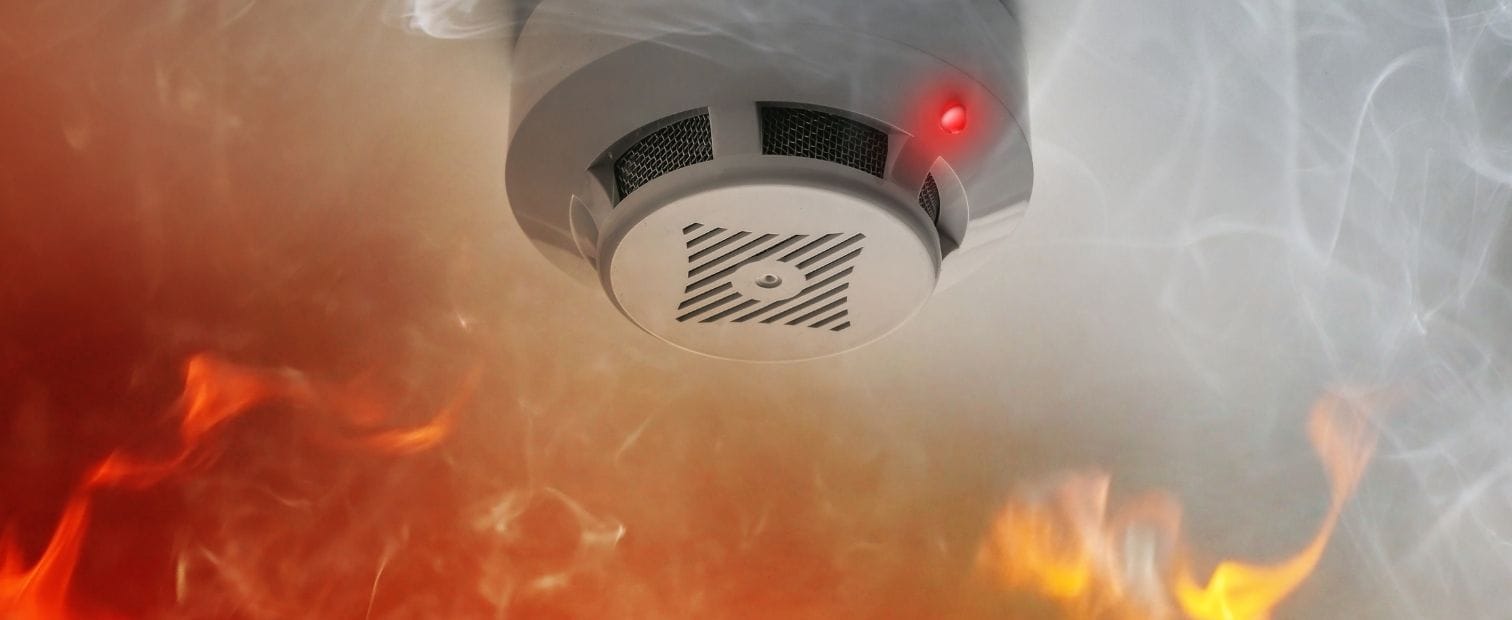
Since February 2022, every home in Scotland has had to carry interlinked fire alarms, a set of smoke and heat alarms that all sound together. The rule is written in rooms, not in a fixed number of units, so two similar houses can need different layouts.
This article sets out what the standard asks for, where each alarm goes and what counts as interlinked, so you can work out what your property needs before anyone quotes for it.
What the Standard Asks of Every Scottish Home
The requirement is the same whether a home is owned or rented, and it comes down to five things:
- A smoke alarm in the room used most during the day, usually the living room
- A smoke alarm in every hallway and landing, on every storey
- A heat alarm in the kitchen
- All of the alarms above ceiling mounted and interlinked, so that one going off sets every other one sounding
- A carbon monoxide alarm in any room with a carbon-fuelled appliance
Interlinked smoke and heat alarms in Scotland are treated as a single system rather than a set of separate devices, and that is the part most people get wrong when they buy alarms individually from a shop. A row of battery smoke alarms bought separately and fitted around a house does not meet the standard on its own, however new or well reviewed each unit is, because nothing links them together. The alarm in the hallway needs to know the moment the alarm in the kitchen has gone off, and that only happens if every unit is wired or wirelessly interlinked as one system.
Where Each Alarm Goes, Room by Room

The Living Room
Fit a smoke alarm in the room you use most during the day. For most homes that is the living room, though in an open-plan flat it may be the kitchen-diner instead. The alarm should sit on the ceiling, away from corners and light fittings, so smoke reaches it as early as possible.
Hallways and Landings
Every circulation space on every storey needs its own smoke alarm: the hallway on the ground floor, the landing upstairs, and any landing in between on a split-level property. These are the routes you would use to get out, so they are also the routes where an early warning matters most.
The Kitchen
A heat alarm, not a smoke alarm, goes in the kitchen. Cooking produces enough smoke and steam on an ordinary evening to set off a smoke alarm falsely, often enough that people start ignoring it or disconnect it altogether, which defeats the point. A heat alarm only responds to a genuine rise in temperature.
Open-Plan Rooms
This is the layout that catches people out. Where a kitchen opens directly onto a living space, the alarm covering the kitchen area still has to be a heat alarm, and one alarm can cover an open-plan hall and living room together, provided no point in the room is more than 7.5 metres from it.
If you have worked out that your own home is short an alarm or two, that is the point most people look at fire alarm installation in Glasgow, and a survey will confirm the exact layout your own property needs.
Carbon Monoxide Alarms, and When One Is Needed
A carbon monoxide alarm is required in any room with a carbon-fuelled appliance, such as a boiler, a gas fire, a wood burning stove or an open fire. The detector sits in the same room as the appliance rather than out in the hallway, because that is where a leak would first be detected. A gas cooker or hob on its own does not need one. The Scottish Government’s tolerable standard guidance also asks for a detector in any room a flue passes through, so a room with no appliance in it can still need one.
Unlike the smoke and heat alarms, a carbon monoxide alarm does not have to be interlinked with the rest of the system. It works as its own standalone unit, and its job is narrower: warning the people in that specific room of a gas that has no smell or colour of its own. Because it protects against a different hazard, it is usually fitted as a short addition to a fire alarm visit rather than as a project of its own.
What Interlinked Actually Means
Interlinked means that one alarm detecting smoke or heat sets every alarm in the property sounding, not just the one nearest the fire. In a house where a bedroom sits two floors above the kitchen, that is the difference between someone sleeping through a fire and being woken by it.

Interlinking can be wired or wireless. The standard asks for the alarms to be linked, not for how they are linked, so sealed wireless units communicating over a radio signal meet the requirement in the same way a hard-wired system does. What does not meet it is a set of unconnected battery alarms bought separately, however new each one is individually, because none of them can tell the others a fire has been detected.
Smoke Alarm Regulations in Scotland: the Standards Each Alarm Must Meet
The smoke alarm regulations in Scotland name a British Standard for each type of alarm, and the standard is more than a technical label: it is what confirms the unit is genuinely fit for the job rather than just badged as one.

Smoke Alarms
Smoke alarms fitted to meet the standard are certified to BS EN 14604, which covers how sensitive the detector is and how reliably it sounds.
Heat Alarms
Heat alarms, the type required in the kitchen, are certified to BS 5446-2, the standard covering fixed heat detectors for domestic properties.
Carbon Monoxide Detectors
Carbon monoxide detectors are certified to BS EN 50291. A combined smoke and carbon monoxide unit has to meet BS EN 50291 for the carbon monoxide side and BS EN 14604 for the smoke side.
A solicitor, an insurer or a letting agent may ask which standard your alarms are fitted to, particularly around a sale or a re-mortgage, and a compliant unit is marked with the relevant standard on its casing, so it can be checked without taking anything apart.
Who Has to Act, and When It Gets Checked
The standard applies to every home in Scotland, whether it is owner-occupied, privately rented or socially rented. Landlords have to meet it under the repairing standard, so a rented property is where the question is most likely to be raised, by a tenant or a letting agent. For an owner, enforcement sits with the local council, which can use its statutory powers to require work on substandard housing. The Scottish Government is also clear that it is not a criminal offence if an owner cannot meet the standard.
For an owner-occupier, the moment this usually comes up in practice is a sale, a re-mortgage or an insurance renewal, when a solicitor, a lender or an insurer asks whether the property complies. Compliance with the standard also forms part of the Home Report when you sell your home. It is worth checking your own alarms against the list above before that question is asked rather than after, since fitting a missing alarm or two is a smaller job than sorting it out under time pressure during a sale.
This standard covers homes only. A shop, an office, a pub or any other business premises is measured against a different set of rules, set out in our guide to fire alarm requirements for Glasgow businesses. Many landlords and sellers use a compliance check like this as the point to review the rest of a property’s security too, from CCTV installation in Glasgow to the systems we install more generally.
Frequently Asked Questions About Interlinked Fire Alarms in Scotland
What are the rules for interlinked smoke alarms in Scotland?
The current smoke alarm regulations in Scotland ask for a smoke alarm in the room used most during the day, a smoke alarm in every hallway and landing, a heat alarm in the kitchen, all interlinked, and a carbon monoxide alarm where there is a carbon-fuelled appliance. The rule applies to every home, owned or rented.
Can I fit interlinked smoke alarms myself?
You can, for one of the two types. The Scottish Government’s guidance says you can fit sealed battery alarms yourself, and that mains-wired alarms must be fitted by a qualified electrician. Where it tends to go wrong is the layout and the interlinking: missing a circulation space, choosing a smoke alarm rather than a heat alarm for the kitchen, or ending up with two separate systems that do not talk to each other.
Can you sell a house in Scotland without interlinked alarms?
Yes. There is no legal bar on selling a property that does not yet comply, but compliance with the standard forms part of the Home Report, and a buyer’s solicitor will usually ask about it. Many sellers choose to have the alarms brought up to standard before marketing the property rather than answering the question during a sale.
Do the alarms have to be mains wired?
No. The standard asks for the alarms to be interlinked, not for how they are linked, so sealed wireless units with long-life batteries meet the requirement in the same way a mains-wired system does. Wireless is often the more practical choice in a property with finished ceilings and no existing cabling.
How many alarms does a two-storey house need?
Most two-storey homes need at least one smoke alarm in the living room, one on each landing or hallway, and a heat alarm in the kitchen, which commonly comes to four alarms, or five where a boiler or fire calls for a carbon monoxide alarm as well. The exact number depends on how many circulation spaces the house has, so a survey is the reliable way to confirm it for your own property.
If you are working out what your own home needs, get in touch via our website, email info@goldstandardsecurityscotland.com, or call 07706 303074 to arrange a survey, or read more about fire alarms in Glasgow and how we fit them.