When most people first start exploring CCTV systems, they often assume all cameras are the same. However, there is a lot more to consider. Whether you’re evaluating home CCTV systems or researching commercial CCTV systems for business premises, understanding the fundamentals can make a significant difference to your security investment.
What Are CCTV Cameras?
Closed-circuit television or “CCTV” refers to an older technology that required footage to be sent directly from camera to recorder and viewed locally on a monitor. The term is now somewhat redundant as advancements in “CCTV”, e.g. IPCCTV and mobile app viewing facilities, mean that footage can be viewed outside of a “closed circuit”. Video surveillance systems (VSS) would be a more appropriate term; however, it’s nowhere near as recognisable or catchy as CCTV.
Modern CCTV cameras have evolved dramatically with significant advancements in both picture quality and camera function. Features like – motion detection, 24 hour colour, intrusion detection, cross-line detection and event alarms are now available at a remarkably affordable price point when 10 years ago they did not exist.
Types of CCTV cameras
- Dome: This discreet, dome-shaped device is vandalism-resistant. It is ideal for indoor home or shop use and is often used in home alarm systems in Glasgow.
- Bullet – Cylindrical, weatherproof, long-range. Perfect for outdoor monitoring of driveways or lots.
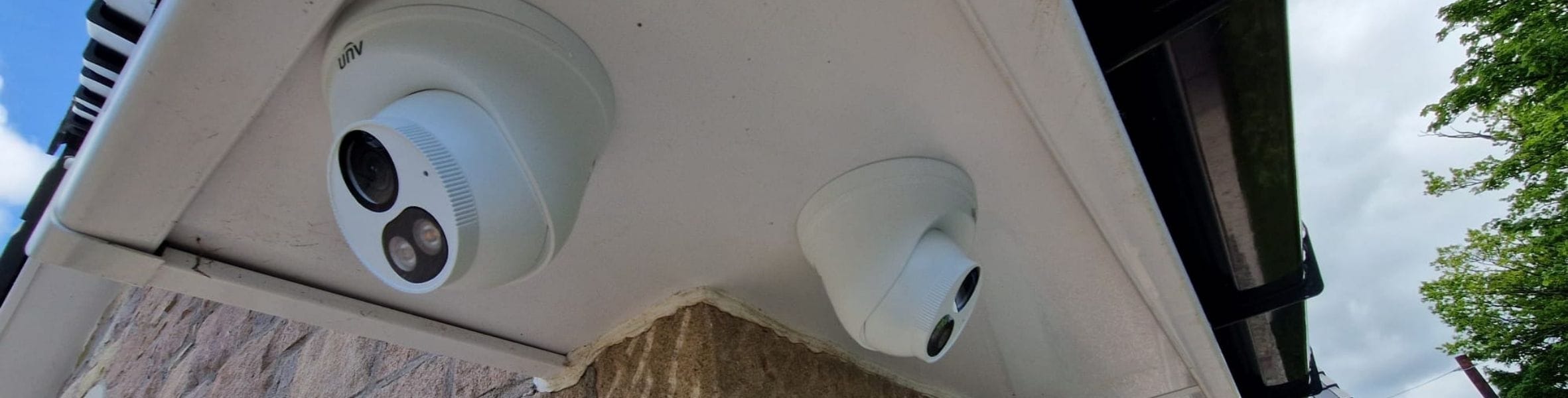
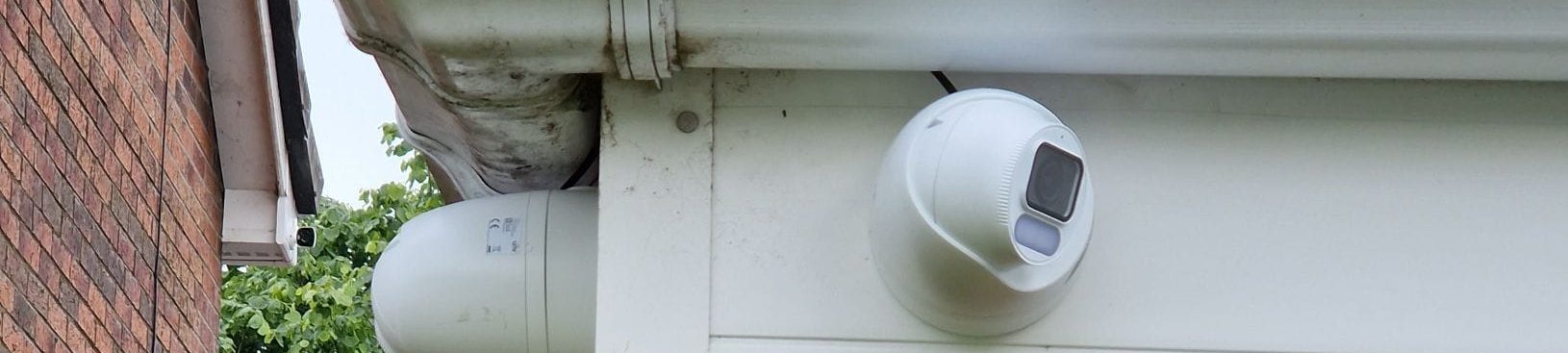
- Turret: Versatile, excellent night vision, indoor/outdoor use. Recommended by a security expert.
- PTZ: Pan-tilt-zoom, remote control, covers large areas like warehouses. Ideal for commercial use.
- Fisheye: 360-degree view, suitable for wide spaces like lobbies. Reduces camera count.
- Pinhole: Small, covert, for discreet surveillance in sensitive areas like banks.

Dome: More vandal resistant but can be affected by rain sitting on outer lens obscuring image or reflections causing blurry video.

Bullet: Greater adjustability but higher profile makes easier for potential vandalism.

Turret: Low profile camera , Discrete, lower level of lens protection. Most popular residential camera.

PTZ: Popular for commercial setting or residential with wider area to cover. Less Discrete and more expensive.

Fisheye: Designed to give ultra wide view from above. Image can appear distorted due to supervise lens.

Pinhole: Ultra compact and very diacrete camera type , available with limited resolution and features due to small size and covert nature.
Benefits of CCTV Cameras
For home CCTV installation, fixed cameras are usually sufficient; however, in some settings, commercial CCTV systems often adopt PTZ cameras, which can pan, tilt and zoom the camera.
While home CCTV systems are usually intended as security measures that would deter a home intrusion, commercial CCTV systems are often required for productivity, monitoring and safety compliance. In these settings, it may be beneficial to have the camera footage remotely monitored by a trained security expert.
Key Considerations for Choosing CCTV Cameras
Image quality is crucial. While most people presume a higher megapixel camera will provide a better quality image, this is not always the case. Various factors such as lens type, aperture size and supplementary lighting often play a greater role in giving you the best CCTV image for a particular setting. Lower lens size, wider view, higher lens size, better detail more suited to closed quarters or smaller area.

Hard-wired CCTV or wireless cameras?
Recently, it has become popular for people to install their own wireless Wi-Fi cameras, as they are initially a more cost-effective option. Hardwired CCTV, unlike cordless cameras, records continuously and does not rely on motion detection to activate the camera. This means that no event goes unrecorded and gives better evidence should footage be required, e.g., vandalism, antisocial behaviour, or a break-in.
Wireless cameras can be placed anywhere due to lack of cable requirement, however they will require a strong Wi-Fi signal, frequent charging or solar panel.
While the most cost-effective option initially is a wireless camera, the ongoing cloud storage over the camera’s lifetime can be substantial. Although hardwired CCTV requires ongoing maintenance, it will be considerably cheaper over the years of ownership.
Installation Tips
Professional CCTV installation can be complex, especially when considering cable concealment and setting up advanced features like AI motion detection, object detection and camera scheduling.
DIY cameras are designed to be fitted by non-professionals with little effort or knowledge.
Whichever route is chosen, the camera’s field of view should be a priority consideration.
It is of utmost importance to find CCTV installation companies that follow strict industry protocols and take due care and consideration to keep your systems within the limitations of GDPR.
Costs of CCTV Systems
While basic DIY CCTV might start around the £200-£300 mark, comprehensive residential or commercial CCTV systems can be more expensive, with system costs ranging from £500 to several thousand pounds. For CCTV systems in Glasgow, general quotations can be offered over the phone, while exact costings will more than likely require a site visit by a security company in Glasgow. Our experienced team specialises in both intruder and CCTV security systems, backed by live human monitoring provided by our NSI gold-accredited alarm receiving centre. This provides our customers with 24/7 rapid response times and direct emergency notification. Our home alarm systems benefit from free lifetime access to mobile apps and come with a minimum 1-year parts and labour warranty.
If you’re ready to discuss your home security needs, contact Gold Standard Security today at gssscotland@gmail.com or call us at 07706 303074.