A business’s security needs are shaped by its activities, location, and daily workflow. For business owners, the first step is to break down the essential considerations when choosing security systems for your organisation.
From there, working with a trusted local company like Gold Standard Security Scotland ensures those needs are met properly. This can help you make confident decisions that protect your property, your staff, and your assets.
Understanding Business Security Needs
A shop on a busy high street deals with different challenges than a warehouse in an industrial estate or an office in Glasgow city centre. Because of these differences, your security setup should be based on your environment and needs, and not a generic template.
When assessing your business security needs, it helps to look at these factors:
- Industry: Security needs differ across industries. For instance, retail settings typically require stronger theft prevention, warehouses focus on detecting unauthorised entry, and hospitality venues depend on access control to manage staff and customer areas.
- Location: High-traffic areas face more opportunistic crime, while rural sites often deal with reduced visibility and slower response times. Properties near transport routes may also attract attention due to easy access.
- Operating Hours: Late-night and 24-hour businesses face risks that daytime operations usually don’t, such as fewer staff on-site and increased exposure during quieter periods.
- Footfall and Access Levels: Understanding how people move through your site helps you choose the right mix of alarms, cameras, and access control and where to place them.
- Previous Security Incidents: Any incident history should inform how your new system is designed, helping address past vulnerabilities more effectively.
In addition to these influencing factors, most businesses also face a set of common security risks that should be considered during system design, such as:
- Theft and Burglary: When individuals steal stock, equipment, or valuables, either by forcing entry or taking items during operating hours.
- Vandalism: Deliberate damage to property, including broken windows, graffiti, or attempts to tamper with exterior fixtures.
- Unauthorised Access: When someone enters restricted areas, such as staff rooms, offices, or storerooms, without permission.
- False Liability Claims: Situations where someone falsely reports an injury or incident on your premises for personal gain.
- Safety Breaches: Risks where staff or visitors could be harmed, such as lone workers facing danger or incidents occurring after hours.
Choosing the Right Business Alarm System
A business alarm system forms the core of an integrated protection setup for your establishment. Most professional commercial alarm systems include a combination of:
- Motion Sensors: Detect movement in key internal areas, such as hallways, stockrooms, corridors, and open offices.
- Door and Window Contacts: Trigger when entry points are opened without authorisation.
- Glass Break Detectors: Identify forced entry through windows via vibrations or sounds when the glass breaks.
- Panic Buttons: A discreet device that allows staff to call for immediate assistance during emergencies or threatening situations.
- Internal and External Sirens: Provide audible warnings and visual deterrents.
- Control Panels and Mobile App Access: Allow you to arm, disarm, and monitor in real time using a control panel or mobile app.
Unmonitored or Monitored Commercial Alarm Systems?
Once you understand the core components, the next step is deciding whether you need an unmonitored or professionally monitored commercial alarm system.
- Unmonitored Alarm Systems: Also known as a self-monitored or standalone system, these systems are cost-effective but rely on you being available to respond as they send alerts directly to the user.
- Monitored Commercial Alarm Systems: With a monitored system, both you and the monitoring centre receive alerts as soon as an issue occurs, giving reassurance of professional oversight and faster action. In terms of cost, monitored systems do come with higher fees than unmonitored alarms.
For businesses looking to compare different alarm setups, explore our full range of security services to find the most suitable option.
Benefits of Business CCTV Systems
CCTV allows you to oversee your premises, document incidents, and discourage unauthorised activity. With around-the-clock recording and mobile access, you stay connected to your business wherever you are.
Why CCTV is Vital for Business Security
When installed correctly and positioned with your layout in mind, CCTV strengthens your overall security strategy in several ways:
- Deterrence: Visible cameras reduce the likelihood of break-ins or shoplifting.
- Evidence Collection: High-definition footage helps identify offenders, resolve disputes, and support insurance claims.
- Remote Monitoring: Live access via mobile apps keeps you informed even outside business hours, when away from the establishment and during periods of low staffing.
- Operational Oversight: Useful for monitoring customer flow, tracking stock movement, observing staff safety, and identifying potential hazards.
Indoor vs. Outdoor Cameras
Different areas of a business require different types of cameras, and choosing the right ones helps ensure you get reliable coverage where it matters most.
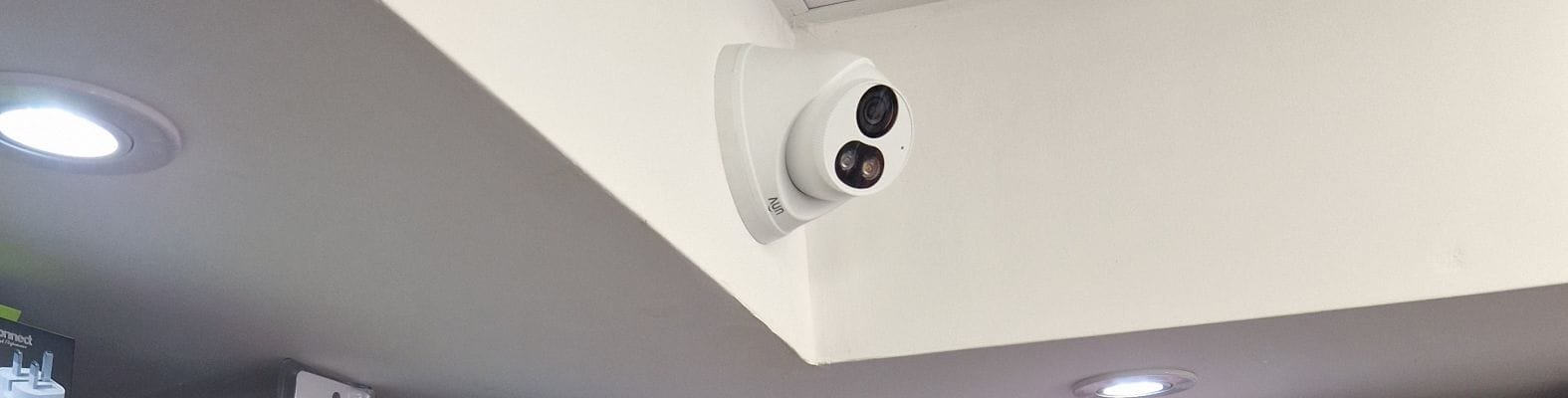
- Indoor Cameras: Indoor CCTV cameras are compact and discreet, making them suitable for offices, retail spaces, stockrooms, staff-only areas, and reception desks. They help monitor daily activity, safeguard valuable equipment, and provide visibility in spaces where customers or staff regularly move around.
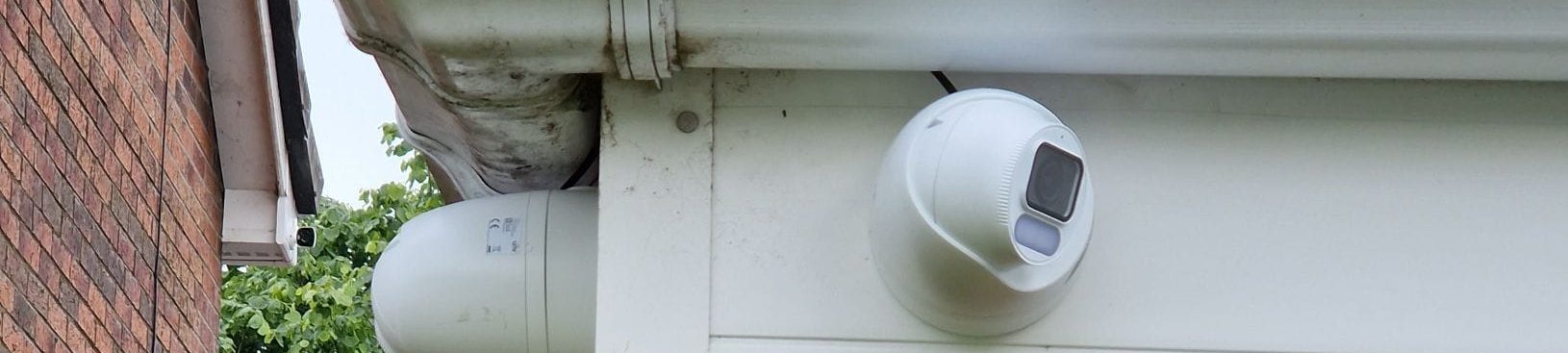
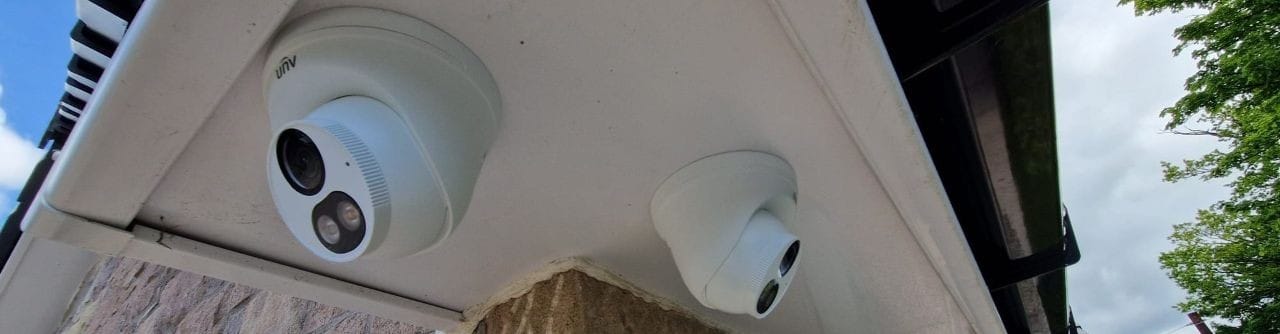
- Outdoor Cameras: Outdoor cameras are built to withstand Scotland’s weather, usually with IP67-rated casings that protect against rain, wind, snow, and debris. They are usually more robust to prevent tampering and are designed to cover key external areas such as entrances, car parks, perimeter fences, loading bays, and delivery points.
Wired vs. Wireless Business CCTV Systems
Both options offer strong security benefits, but they work differently and suit different types of businesses and budgets.
- Wired CCTV Systems: Because they are hardwired back to a recorder, they provide continuous recording without relying on a Wi-Fi signal and are more secure against interference due to the cables. Although installation can take slightly longer due to cabling, the result is a system that offers consistent performance throughout the day and night.
- Wireless CCTV Systems: Since they connect via Wi-Fi, they are easier to position and relocate if your layout changes or you need temporary coverage in a specific area. However, their performance depends heavily on having a strong and stable wireless network throughout the property.
At Gold Standard Security Scotland, our commercial CCTV setups give you the foundation for a dependable, long-term security system that works across a variety of business environments. To find the right fit for your site, see our CCTV system options.
Integrated Commercial Security Systems
While standalone alarms or cameras offer defence on their own, combining systems creates a more complete and reliable solution.
How integrated systems help your commercial establishment:
- Instant Alerts: Receive immediate notifications the moment the system detects movement, restricted access breaches, or camera-triggered activity, keeping you aware of issues as they happen.
- Better Verification: CCTV footage and alarm signals work together to confirm genuine threats, reducing false alarms and improving response accuracy.
- Centralised Control: Manage cameras, alarms, and access control from a single app or dashboard, removing the need to switch between multiple systems.
- Improved Staff Safety: Panic buttons can be linked directly to your monitoring team and CCTV system, giving staff fast support in emergencies or high-risk situations.
- Secure Access Management: Set permissions and control entry points to ensure only authorised staff can access restricted areas.
- Cloud Storage: Store footage and system data securely in the cloud, keeping important evidence protected even if on-site equipment is damaged or stolen.
- Automation: Automate tasks such as lighting and door locking to strengthen security and support smooth closing routines.
Office Security Systems: What to Prioritise
Office environments contain valuable assets, confidential information, and multiple areas that are used by both staff and visitors. Because of this, security measures for offices should include:
- Discreet Indoor Cameras: Suitable for reception areas, corridors, meeting rooms, and storage spaces, giving you clear oversight of movement without disrupting the workspace.
- Access Control Systems: Keycards, fobs, or PIN-based entry help you manage who can enter restricted areas, reducing the risk of unauthorised access to sensitive rooms or equipment.
- Wireless Alarm Systems: These are fast to install, require minimal disruption to daily operations, and offer flexible placement to suit changing office layouts.
- Panic Alarms: A reliable way for reception teams, lone workers, or staff in front-facing roles to request immediate assistance during unexpected or high-risk situations.
- Staff Security Training: Helps reinforce best practices such as preventing tailgating, managing keys and access cards properly, and recognising potential security risks within the office.
Why Choose Gold Standard Security Scotland
With strong local knowledge, expert installation, and ongoing support, Gold Standard Security Scotland delivers commercial security systems that perform in real conditions, whether you operate in a busy city centre, an industrial estate, or a rural business park.
Here is what sets Gold Standard Security Scotland apart:
- Local Expertise: Our team understands Glasgow and the wider Central Scotland area, including the specific risks businesses face in different neighbourhoods. This local insight allows us to recommend security setups that match what your business needs.
- Tailored Solutions: We assess your property in person and design security systems that match your needs and setup.
- Certified Installation: Our technicians are trained, experienced, and committed to high-quality installations. We ensure every device is positioned correctly, fully tested, and compliant.
- Advanced Technology: We use equipment that is built to offer clear footage, dependable detection, and modern features such as remote access, smart notifications, and false-alarm reduction.
- Ongoing Support: We provide maintenance, system upgrades, remote diagnostics, and on-site assistance when required, ensuring your system continues to operate at its best.
- Compliance-Ready Setups: Our systems are configured to meet insurance, industry, and regulatory requirements, giving you peace of mind that your security setup protects your premises and is also compliant.
If you’re ready to take the next step and want expert advice tailored to your business, you can contact our team for a free consultation.
Frequently Asked Questions About Business Security Systems
What’s the difference between business and commercial security systems?
The terms are often used interchangeably, but commercial security systems generally apply to bigger premises or higher-risk sites, while business security systems usually suit offices and smaller retail locations.
Do I need both CCTV and an alarm system?
Most businesses benefit from using both. CCTV records activity and deters incidents, while alarms provide immediate alerts and emergency responses.
Can I remotely monitor my business security system?
Yes. Our modern systems offer app access, allowing you to check cameras, receive alerts, arm or disarm alarms, and view recordings from anywhere.
How long does it take to install a full security system?
With us, most smaller premises are installed within a few hours, while larger commercial properties with more devices or complex layouts may take up to one or two days.
Are security systems tax-deductible for businesses?
In many situations, security equipment qualifies as a deductible business cost. To be sure it applies to your setup, speak with your accountant for guidance.